Categories
Guest Bloggers

Mondays with Matthew: Hello Kuwait

embassy

Spend a few minutes at Kuwait airport and you are reminded that people are coming and going every day. Families returning from holiday, business travellers heading off, air crew stopping over. Amongst all these you may occasionally spot the new arrivals, and I don’t mean those visiting for a few days, but those who have arrived to make Kuwait their home. Maybe for a year or two, maybe for longer. At the end of August, amidst the hustle and bustle of the airport, my family and I arrived in Kuwait. For my wife and kids this was the first time they’ve been here, but Kuwait is now home, and will be for the next 4 years.

I want to start a conversation with you so let me start by telling you what my own reactions have been.

Kuwaitis are welcoming, open and friendly. Irrespective of any conservative traditions and social customs, Kuwait feels modern, vibrant and dynamic. As you drive into town from the airport, you also get an immediate sense of Kuwait being quite westernised. Fast food outlets light up the roadsides. Cars are big, the roads are wide. This is a land of comfort, consumerism and confidence. Kuwait is not shy. Kuwait has money, and more importantly Kuwait has oil.

But that initial, essentially superficial, impression is just that – superficial. As British Ambassador, moving into a house that claims to be the oldest continually-occupied residential building in Kuwait, I am reminded every day about the history. Kuwait’s history. Our shared history.

Firstly, the house itself – the notes left for me explain how the British architect was brought from Bushehr and the funding approved by the Government in India. Then there’s this sepia photograph on the wall showing the Residence of the “Political Agent”, constructed in 1935-6, taken in 1951 when the gates opened onto the beach and there was no Gulf Road. More recently, I am also reminded of the wonderful 50/20 celebrations that took place in 2001 – half a century since independence from Great Britain, two decades since the liberation – followed in 2012 by the State Visit of His Highness The Amir.

But it’s about more than official commemorations or grand occasions. For many Kuwaitis London and the UK is their home away from home, many more have studied there, and Kuwait sends more visitors to the UK each year than any other GCC country. So when it comes to my plans and hopes as the new British Ambassador, I remember that there is a huge amount already there between our two countries. Kuwait and Britain are, and will always be, connected – in every sense.

Before coming here, we had heard a lot about the country and the people, and during the last eight weeks we’ve learned a little more. One thing, which I perhaps knew already, is that as an Ambassador you enjoy a very privileged existence. Everyone is always very polite and courteous, but if you really want to understand how people feel (rather than just hear what they think you want to hear) then you have to work hard to get out, meet people and listen.

My goal is to do precisely that. I want to listen to you. I’d like you to tell me what you think I need to hear. So tell me, is the Kuwait I am seeing the same as the one you recognise?
In any case, thank you Kuwait for welcoming me. It’s good to be here

Post by Matthew Lodge
British Ambassador to Kuwait
Instagram: @HMAMatthewLodge Twitter: @HMAMatthewLodge


Categories
Events Things to do

Things to do in Kuwait this weekend

flyingstart

Thursday
Exhibition: Ghadah Alkandari – Secretary
STOMP Theatrical Show

Friday
STOMP Theatrical Show
Spraybox Opening
Book Club Meeting

Saturday
STOMP Theatrical Show
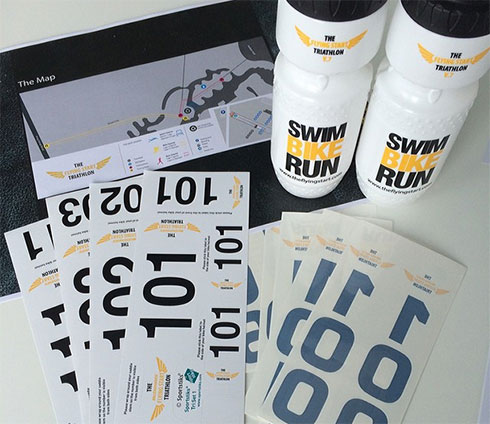
The Flying Start Triathlon
Yoga Fest

If you’d like to share an event on the blog [Email Me]


Categories
Mags & Books

Wizr, Kuwait’s Greatest Driver

lastwizr

Back in the 70s there was a British journalist living in Kuwait by the name of Keith Wells. He used to work for the Arab Times and in his spare time he also used to write books about Kuwait, including a witty series on a character named Wizr who was Kuwait’s greatest driver. Between 1979 and 1984, Keith released three Wizr books but sadly there really isn’t a lot of information on them nor Keith online. In fact, there is a blog dedicated to keeping Keith and his Wizr series alive but even the blog doesn’t have much info nor content. The books document life in Kuwait during that period with humor and nicely drawn illustrations.

wizr2

Since The Kuwait Bookshops is closing this might be your only chance to own one of his Wizr books. In 1984 he released “The Last Wizr Book” and The Kuwait Bookshops in Muthana still has copies of it remaining and they’re selling them cheap for KD1.5 (the bookshop is selling everything for 50% off). The book was his last one on the Wizr since the illustrator he had teamed up with for the previous two books had passed away. I tried to find the other two books online and I managed to snag his second book (pictured above) on eBay for KD7.5 and his first book on the series (pictured below) for KD16. It was more than what I wanted to pay, but I somehow felt compelled to save this part of Kuwait’s history. So try to grab his last book from Muthana if you can.

wizr1

If anyone has any interesting information related to Keith or his books let me know.


Categories
Funny

Celebrate Oktoberfest in Kuwait

octoberfest

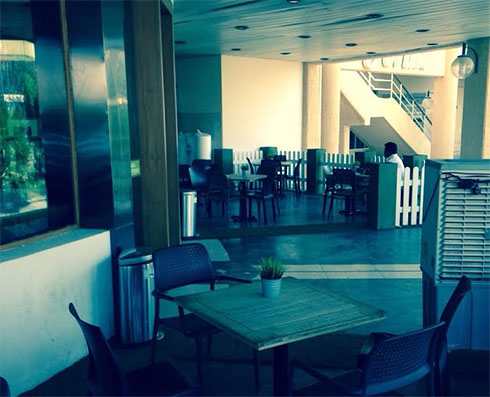
My friend sent me the screen capture above, at first I thought it was a joke but I called Hilton up and it’s actually taking place tomorrow.


Categories
News

There is no Ebola in Kuwait

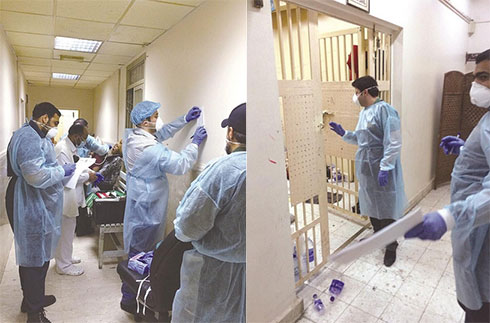
According to KUNA, the Ministry of Health quashed reports on social media that Ebola cases were discovered in Kuwait, terming them as “baseless”. The Rumaithiya police station had requested the Health Ministry come and examine some Asian and Ethiopian expat women held there who turned out to only have an upper respiratory tract infection.

On the other hand Al Rai newspaper has reported that the detainees in question will be deported so problem solved.


Categories
News

Ebola in Kuwait?

ebolainkuwait

According to alrayalaam.com, three men of African origin that were being held at the Rumaythia Police station exhibited symptoms of the deadly Ebola virus. The three men are currently being quarantined until the test results come out. Some sources like @aldostor_news have stated the three men actually are infected with Ebola but not sure how reliable those sources are so I wouldn’t panic until the results come out.


Categories
50s to 90s Information Mags & Books

Save The Kuwait Bookshops

kuwaitbookshop1

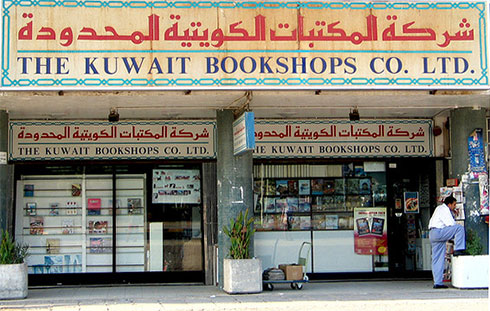
As a kid growing up in Kuwait in the 80s I used to pass by Muthana Complex in Kuwait City all the time with my family. Back then Muthana Complex was what Avenues is to Kuwait today, it was a beautiful mall and it used to get pretty packed on weekends. We had friends who lived in the apartments in Muthana so we were there pretty often, probably once a week. Whenever we used to be done visiting our friends we would head into the mall and the first shop we would see was The Kuwait Bookshops. We’d always walk in and either me or my sister would always end up leaving with a book or a magazine. But the Kuwait Bookshops was around way before the 80s and way before I was born. Last night I sat down with the owner of the bookshop Bashir Alkhatib and this is the story of The Kuwait Bookshops.

kuwaitbookshop4

The History

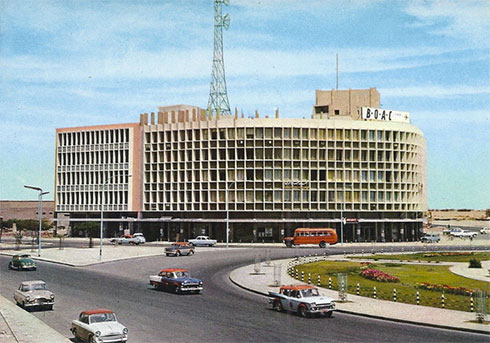
Bashir moved to Kuwait in 1959 after studying in the US. He started working at the Ministry of Information and grew frustrated really quickly that he couldn’t buy any books in Kuwait. He used to love to read and there wasn’t any place that sold books so he thought to himself, this town needs a bookshop. In 1961 he opened The Kuwait Bookshops in the Thunayan AlGhanim building on Soor Street. It was one of the most advanced buildings in Kuwait at the time and one of the first to have an elevator. According to Bashir, the bedouins used to come in from the desert and stand in line to watch “the horse” that can go up and down. Back then the Thunayan AlGhanim building also housed the KOC offices as well as the British Consulate and they were his best customers. Bashir continued to work at the Ministry while also running the bookshop, he actually had to work at the Ministry overtime so he could afford to pay the expenses of the bookshop.

alghanimbuilding

One of the bookshops customers was a British guy who used to come in regularly to pick up the English paper The Times. One day he came in to pick up the paper but he couldn’t find any so he asked Bashir, why don’t you have The Times? Bashir replied telling him he hadn’t paid the bill so they stopped sending his bookshop the papers. He asked him how come you didn’t pay the bill? Bashir told him that he didn’t have the money so he couldn’t. Turns out the customer was a manager at Gulf Bank and told him to pass by him at the bank. So Bashir went to Gulf Bank and sat with the manager who asked him, whats your dream? Bashir told him his dream was to have a bookshop similar to the ones in England and the US. After around an hour of chatting the manager told him he would give him an overdraft of KD10,000 guaranteed by the manger himself. Bashir took the money and got on the plane and headed to London where he met with various publishers. He managed to strike deals on credit where he would be able to buy books and newspapers and pay them back 90 days later which helped him a lot financially. The Kuwait Bookshops became one of the first to import books and newspapers to the Gulf.

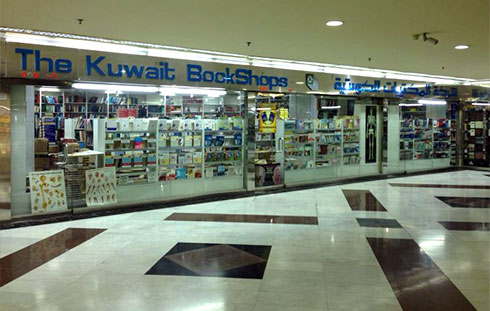
In 1964 he opened his second location in Ahmadi due to popular request since his KOC customers kept asking for a location closer to them. Bashir used to originally get his magazines and papers from England but there was a distribution company that used to get magazines and newspapers from the US so in 1970 he decided to purchase that distribution company. Due to the amount of books, magazines and newspapers they were getting they had to get a warehouse to store all the items since there wasn’t enough space in the Soor and Ahmadi locations to display everything. Then in the mid 80s Muthana Complex started being built down the street from their Soor location so he purchased a shop there. In 1986 Muthana opened and The Kuwait Bookshops was one of the first shops to open there.

bookshop1990

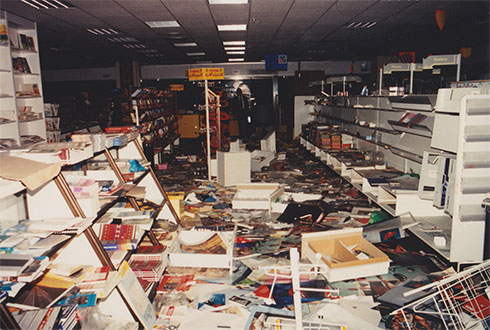
In 1990 the invasion happened and the shop got ransacked by the Iraqi soldiers. After the invasion Bashir went to his publishers one by one and asked them how much he had owed them but the publishers all told him that any debt he owed before the invasion would be wiped clean and they would start fresh from again. In 1992 The Kuwait Bookshops reopened and it’s been there ever since.

kuwaitbookshop2

The Present

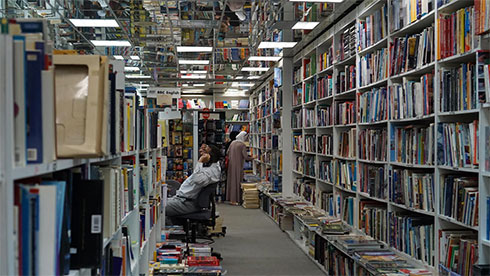
Due to irreconcilable differences between the partners, The Kuwait Bookshops is currently at risk of getting liquidating. The only way to save the bookshop is to buy out the other partner. If by December 5th the bookshop isn’t saved, then the bookstore along with it’s history will vanish. It’s depressing because The bookshop is a part of Kuwait’s heritage and once it’s gone its gone. There is currently a hashtag being used #savekuwaitbookshops on Instagram and Twitter so if you do pass by the store please hashtag your photos. Maybe with enough awareness someone will come in and help save the shop. If anyone by any chance is interested in possibly buying out the other partner, please [Email Me]

Note: First photo on top taken by Fabio Sabatini. Second photo taken by Nadia Nader.


Categories
50s to 90s Photography

Kuwait didn’t look like Kuwait

koc1

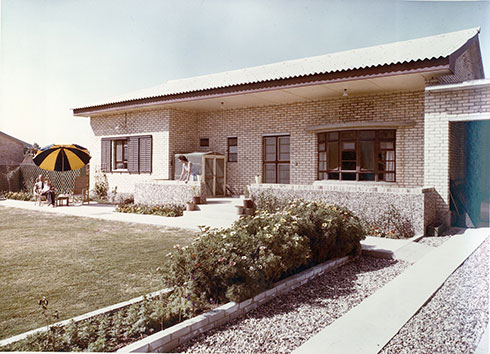
While flipping through the photos I brought back home from KOC I found these three which I loved because of the fact they look nothing like Kuwait. The first one on top I’m guessing is from the Anglo American School, the second photo is of a house in Ahmadi while the last photo from the Gazelle Club.

koc2

koc3

Photos courtesy of the KOC Information Team.


Categories
Events Things to do

Things to do in Kuwait this weekend

wakiday

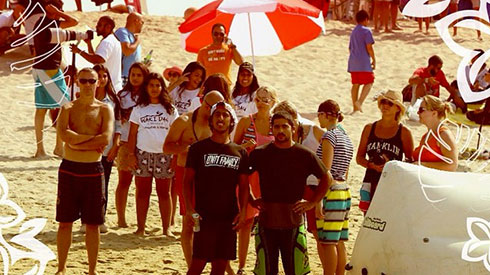
A bunch of things happening this weekend. I already passed by the Outdoor Sport and Safari Expo and I found it interesting, but it’s for people who are into off-road vehicles or hunting. Friday there is the Waki Day event in Khiran which should be fun since it will include a wake boarding competition, lots of stalls selling food and other items as well as a DJ. Check out all the events taking place this weekend below:

Thursday
Exhibition: Layers
Outdoor Sport and Safari Expo
Mad Musicals 10

Friday
Outdoor Sport and Safari Expo
Mad Musicals 10
Waki Day Beach Event

Saturday
Outdoor Sport and Safari Expo
Dhow Sunset Dinner Cruise

If you’d like to share an event on the blog [Email Me]

Update: Due to bad weather, Waki Day has been postponed.


Categories
50s to 90s Kuwait Photography

Life in Kuwait back in the 1950s – Part 2

Life in Kuwait back in the 1950s is a series of posts on simple things from life back then that many people might have forgotten or not even have known about.
If you missed the first part click [Here].

This is
Life in Kuwait back in the 1950s – Part 2
by John Beresford

————————-

rugby

Kuwait Rugby Football Club – the first ‘Oval Ball’
My father, Paul Beresford, is doing the crowning. Photo probably taken 1949-1952. As the club house was a large nissen hut, it was held elsewhere – probably in the guest house as the Hubara Club was not built at this time. The club colours were black and amber hoops with black shorts ( alternate strip was red and white hoops with white shorts, if you had them). Note the set of rugby goal posts framing the crowning.

divingboard

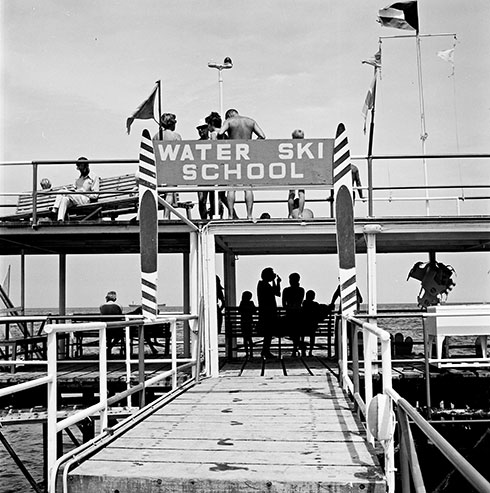
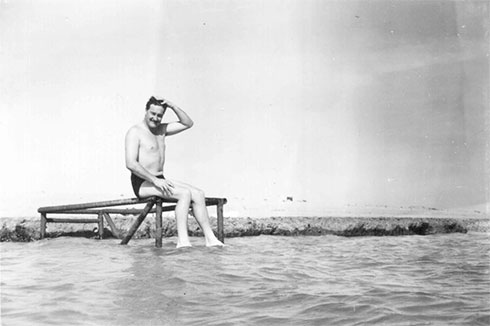
Old Diving Board, Fintas, 1953
Fintas was a few huts and really just an area rather than a settlement. It was north of Fahaheel. From google maps it is now completely built up. Later on KOC fenced off a Families Beach just south of the North Pier. There were also beaches at the SBOA – Small Boat Owners’ Association and the CYC – Cumberland Yacht Club, just south of the South Pier and north of the Shaiba complex, that always smelled of sulphur. These were within the perimeter of the Mina Al Ahmadi complex.

rolling

Ahmadi, 1959
Me rolling around some of the Swedish prefabricated houses. The caption on the back says ‘John rolling round the Swedish houses’. I might have been driving it slowly. After all, it is a small roller, it wouldn’t go very fast, and there is nothing round to be hit so I might have been driving it. I don’t remember.

There are no eucalyptus trees in the photo. These were planted along every road with a hollow around the base of the trunk and the earth scooped into a circular wall around it. A lot of houses had tamarisk trees planted along the perimeter to lessen the wind and to give some shade. A lot of the roads around Ahmadi had pavements – hardly anyone walked along them as it was too hot. I remember once where the temperature got to 178 degrees Fahrenheit in the sun – 81.2 degrees c. the swimming pool in the Hubara Club was measured at about 108 degrees f (42 degrees c). I got out at 105 – no-one was swimming, we were all floating around like jellyfish. The water was above blood temperature and just warmed you up and we all became so lethargic. Since then I have wondered why a hot bath does not seem to have the same effect.

Yet I also remember once at the KOC Anglo American School, which only took children up to the age of 13 – there was a very limited choice of schooling in Kuwait at the time and KOC gave parents a grant to send children to boarding school back in the UK – all of us kids were grouped in the playground around a tap that had been dripping, and a large icicle had formed – it was the first we had seen. I caught the bus at 07:10 to go to school and we came home for lunch at 11:30. Dad arrived, and went back to work at about 12:15, and would be back at home at 16:30. At about 12:15 I got the bus back to school and was back at home at 15:30. In the middle of the morning we had break, and there would be a metal container of hot cocoa for us to drink, every day, whether it was summer or winter. It was piping hot and we were given enamel cups to drink from. These got too hot to use so the first children used to take 2 cups and pour the cocoa from one cup to the other in order to cool it down, which meant that half of the children got no cocoa at all. It was so hot – if you drank it immediately it did burn your lips. Of course, whether you really want a cup of hot cocoa in summer in Kuwait is a moot point. It was probably something about being British.

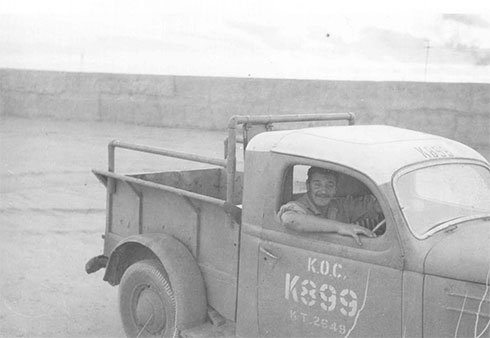
pickup

Paul with old Ford V-8 pick up #899, 1954
The seat looks to be really low relative to the window as Dad was about 5’10”. Looks like it would have made a fun little hot-rod.

————————-

End of part 2


Categories
50s to 90s Information Kuwait

Life in Kuwait back in the 1950s – Part 1

Back in May while doing some research about Kuwait in the old days I contacted a person by the name of John Beresford and asked him if he had any old photographs or videos of Kuwait from back in the old days. Turns out he didn’t have any videos but he did have some photos and more importantly, a treasure of information, mostly stories of simple things from life back then that many people might have forgotten or not even have known about. I’ve been trying to figure out how to share this trove of fascinating info for the past week and just decided I would share it in parts.

This is
Life in Kuwait back in the 1950s – Part 1
by John Beresford

————————-

Ahmadi was built from scratch, power, drains, everything. My father arrived in April 1949 – he missed the last flying boat service by a week which always disappointed him – he fancied the flight from Beirut via the Iraqi Marshes to Shuwaik. One of the people he arrived with got up, walked to the door, looked out and went back to sit down – he did not get off the plane. Dad did and spent 2 weeks in a tent before graduating to a nissen hut, which was far too hot – with limited power there was no overhead fan. He shared with some fairly coarse drillers from Oklahoma who kept a pistol which was passed around in turn to everyone. It was the job of the person with the pistol to go outside at night and shoot any braying donkeys that were keeping people awake. The only thing he kept from the experience was a taste for iced tea and a distaste for drillers.

My parents got married in 1954. Kuwait Oil Company (KOC) gave them a married quarter and equipped it. Furniture, linen, plates, cutlery, aluminium saucepans, were supplied. I still use the cutlery – EPNS from Mappin and Webb, and some for the saucepans and chip pans. They are stamped with ‘KUOCO’. The crockery had a green band around the edge – I don’t remember who made it. You supplied your own curtains, carpets and bedding. There was nowhere to buy such things so KOC had a commissariat and issued such items. Later on, in the 1960’s, it decided to stop doing this and let everyone keep what they had already received. There was a laundry in the industrial area, North of the South tank farm, where items could be laundered, dry cleaned and starched if necessary. I threw away an old KOC laundry box this summer- it had been used to store tools in the garage. The system was pretty much the same as the army used, and most people employees had been in the forces. They had been posted overseas and had little desire to return to the UK as it was cold, depressed and depressing. Quite a few had been in the British Palestine Police and after 1948 moved elsewhere. There was quite a mix of people around; Dad liked playing rugby in Basrah because there were lots of nightclubs and shows populated by white Russian dancers who could not go back home.

house1

In the picture of the front room note:

– The gas fire – every KOC European/US house had a gas fire , and we used it!

– There is an electrical fan on the floor. I don’t know if this means there was no air-conditioning yet. Overhead fans did exist. The air-conditioning was not as nowadays, with individual units to each room. KOC had a central Ice Plant, that produced ice (obvious from the name) and a lot of cold water. This was piped around the European part of Ahmadi (the management/supervisory accommodation) because managers and supervisors tended to be European, and had higher spec accommodation. The Indians and Pakistanis (IPs) had their area and type of houses, and the Arabs had theirs. Arab managers had management houses. The original drains were made of cast iron and the manager in charge of the domestic infrastructure got bored and did a survey to see haw the drains stood up to use. His conclusion was that the drains in the IP areas corroded more quickly that in the Arab areas, and the Europeans’ drains corroded least of all. He attributed this to the diet.

However, reverting to the a/c, the insulated pipes carried the chilled water to the main a/c unit in every house, and from there cooled air was pumped around the houses. It was an efficient way of supplying a/c. The houses had large ducts made of asbestos sheet that cooled most rooms. I don’t know of anyone that has blamed any subsequent cancer on having had their a/c ducts made of it. Of course when my father had been doing some plumbing and had failed to complete it before the ice plant started to pump its cool water around town he had to phone up and tell them to stop the pump until he was all watertight again! As he was by this time in charge of Ahmadi’s services as well as the oil company’s electrics he could get away with a lot.

– The standard lamp is the one issued by KOC. The entire front room looks shockingly similar to the 1950s room in the Geffrye Museum – a small museum in London, North of Liverpool Street Station, that displays the British domestic front room throughout the centuries. So many people had rooms like the one in the museum. Especially the textiles.

oldhouse

The photo above shows the house after my parents had moved in. There is no garden. It was easier to get the fence and other bits from KOC and build your own. Dad bought concrete flagstones and brought them home 2-3 at a time. In the distance another house is being built. This is up in the Ridge area of Ahmadi. Our house backed onto desert (from the photo at this time it seems to have fronted onto desert as well) and at the back were well heads from the Ahmadi field. In 1956 someone took exception to the Suez Crisis and blew one of them up. This really annoyed my mother. I had 24 terry nappies that were reusable and most of them had been boiled and were hanging on the line when the explosion happed. The fire that resulted covered them all in oily soot and Mum never managed to get them white again. The clean up afterwards she never forgot. Things had to be cleaned. If she had thrown them away there were no more to be obtained. This ridge area was covered in houses when we left in 1972. Houses were every 30-40 yards or less. As it started to drop down the long incline to the sea the slope arrived at the Hubara Club, and the golf course, neither of which had been built when this photo was taken.

Some houses were called PMQs others were called Swedes because they were wooden houses, prefabricated and shipped in from Sweden. Ours was made of Basrah brick which is quite soft. Generally the Americans had bigger houses and earned more money because they were Americans. It was said that everything cost more in the USA. If it did then, it certainly does not nowadays. Everyone had their grade of housing – very much like the armed forces. Bachelors had their accommodation in the guest house where we sometime went on fridays to have a curry. Only rarely, but we enjoyed it greatly. Again, the ‘Bachelors’ Mess’ was modelled on the armed forces.

One way or another you could get most things from KOC. After prohibition came in he and one of his staff, who had worked in a distillery, had the fitters in the electrical division make a still, a proper one, with thermostats, electrical heating, a cooled column for fractionalisation with about 800 marbles in it to increase the surface area for condensation, and the distillate was filtered through charcoal. They then distilled it a 2nd time for purity and then converted it into whatever tipple they wanted, usually gin and brandy. A mail order shop in New York sold food colouring and ingredients especially designed for home-made hooch. The cook made the caramel for the brandy (Dad liked the treacly taste of the Cypriot Keo brandy) and to add flavour he threw a handful of white oak chips into each bottle to simulate aging in a cask. Once his shipment got stopped by Kuwaiti customs and he had to explain what it was for to get release; he said that the white oak chips were for smoking fish, and took along an article explain how kippers were made to help. After much scepticism the shipment was released.

I mentioned a cook. KOC gave managerial staff an allowance to be spent on a servant. The choice was an ayah or a cook. We had a cook. He was a fantastic cook. He was a Pakistani and before partition had been a demonstration chef at the Indian Army School of Cookery. He could cook anything well and knew all western culinary techniques, and if he had forgotten he said so, and asked for a Larousse or some such to refresh his memory. He must have been quite old as he remembered being caught in the great Quetta earthquake and that was in the 1920s.

————————-

End of Part 1



Categories
News

Kuwait – The worst country to be an expat

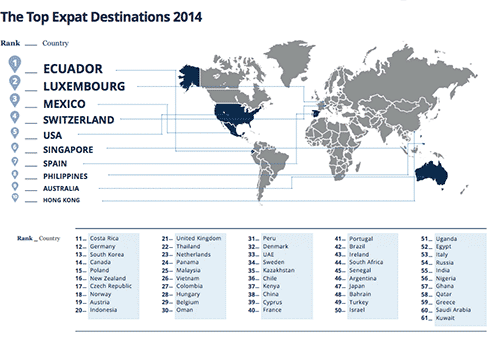
expatdestinations

According to the latest 2014 Expat Insider report by InterNations, Kuwait ranked last ast the worst country to be an expat. The report is based on responses from 14,000 expats in 160 countries and the categories measued quality of life, ease of settling in, working abroad, family life, personal finance, and overall satisfaction living abroad. According to the report:

Kuwait ranks last in the overall country ranking. This is largely due to its low results for personal happiness and in the Ease of Settling In Index. Expats in Kuwait do not think it is easy to settle down there, make friends, or feel at home. Only 5% of survey participants feel completely at home there, and only 7% find it very easy to make local friends.

That reasons sound right but I’m not sure how Saudi Arabia managed to rank as a better place than Kuwait. Check out the full report [Here]

Update: Due to the lack of maturity by some I’ve decided to close this post for comments.


Categories
Funny

How do you know everyone is out of Kuwait?

pickyo

There is no queue at Pick Yo.

Thanks Asif


Categories
Interesting

I Date Kuwait

idatekuwait

Last week I posted about a local blog I started reading and found fascinating called Single in the Shires. It must have been inspiring because another blog popped up this week called I Date Kuwait. While Single in the Shires is about the dating adventures of a single British girl living in Kuwait, I Date Kuwait is about the dating adventures of a single Kuwaiti girl. She just has four posts up but I think it’s going to be interesting to see the contrast between a British expat dating in Kuwait and a young Kuwaiti girl. Check it out [Here]


Categories
Photography

Red Arrows Over Kuwait City

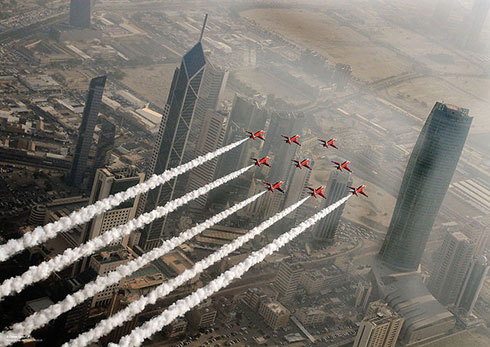
raf

Beautiful shot of the Red Arrows flying in formation over the Al Hamra Tower in Kuwait City. This image was a winner in the 2014 Royal Air Force Photographic Competition. [Link]