A couple of weeks back I was driving in Salmiya when I got stuck in a bit of inside road traffic. While waiting for it to clear up I spotted a small hole in the wall restaurant next to me called Hermanos Kitchen. So I looked for it on instagram to see what the place was and it turned out to be a Filipino restaurant. It looked like a nice place so yesterday I decided to pass by and try it out.
Hermanos has only been open for a few of months now and so is still fairly new. The interior is small with around 6 tables and looked good for a hole in the wall. They had a Westlife concert playing on the television which is actually exactly what I would have expected at a Filipino restaurant. The menu was hand written on the wall and I couldn’t understand any of it. I had’t really had any Filipino cuisine previously and so had no idea what all the items were. It was one of those occasions where I wished the menu had pictures alongside the dish names or at least a description in English.
The waiter tried his best to explain and recommend dishes and I ended up ordering three of them, the Astig Na Chicken BBQ, Fish Be Wit U and the Manoy Bikol Express. Also ordered an A&W Root Beer Float!
From the three dishes I ended up liking only the chicken BBQ, but the other two I actually wouldn’t have ordered if I knew exactly what they were since they contained ingredients I generally don’t like. My favorite thing though obviously had to be the A&W Root Beer float, hadn’t had that since A&W shutdown over a decade ago.
There a lot of different Filipino restaurants in Kuwait but this one just seems like the nicest one. The prices are pretty good with my bill coming out to around KD7. I just wish it was more non-Filipino friendly, an English menu would have made things much more easier. If I do go back it would definitely have to be with an Asian a Filipino friend which I just realized, I don’t think I have.
Check out Hermanos Kitchen on instagram under the account @hermanoskitchen and on Facebook [Here]. They’re located in Salmiya behind Johnny Rockets [Google Maps]
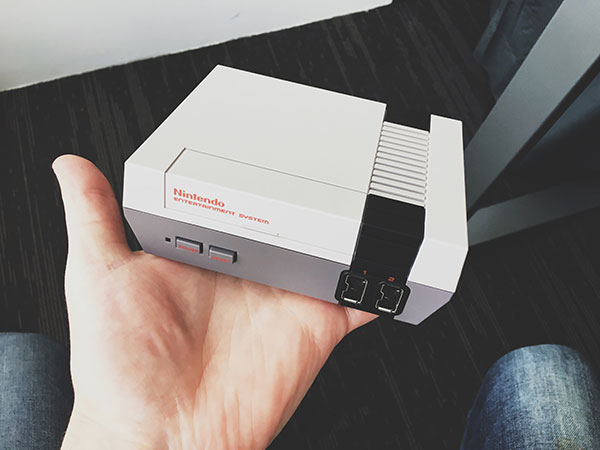
According to my lawyer I can’t mention the name of the supermarket. I also had to mute out the audio in the video since the guy recording mentions the name so I replaced the audio with music that sounds like something out of a Nintendo game.
On a side note is it bad that I am more upset with the fact that I can no longer find Haribo gummy bears, Dove Men+Care Antiperspirant or Sensodyne Extra Fresh Toothpaste at the branch I frequent more than I care about this rat?
Also just got the following response from the supermarket:
Hello Mark,
****** is aware of what is being circulated and is investigating it, as ****** takes pest control very seriously and deals with the best and most reliable pest control companies in Kuwait, making sure all hygiene standard are exceeded. Our Operations team, in coordination with our Pest company, has done a full and detailed check of the store and no issues were found till date. (Noting that Prior to the video being circulated in a day, the store had gone through the normal scheduled deep clean exercise with no issues found)
Earlier this morning, Andrea Bocelli performed at the opening of the Sheikh Jaber Al Ahmad Cultural Centre. If this is the first you hear about it you’re not alone since the opening was only officially announced yesterday (I announced it two months ago). Now that the centre is open I figured I’d share a list of upcoming events that will be taking place there, but the only problem is, a list doesn’t exist yet.
The whole project has been shrouded in secrecy since the start. When I broke information on the Cultural Centre back in 2014, barely anyone knew about the project other than those involved in it. Now two years later the project is completed but everything is still a big secret and I can’t understand why.
Usually I wouldn’t care but this is such a great and beautiful project that it’s a shame it didn’t get so much more publicity. Hopefully things will be less secretive moving forward but for now, here are links to the cultural centre website and social media accounts.
I’ll also take this opportunity to thank all my sources who for the past two years have been feeding me as much information as they could on this project so I could share it with you guys. It’s because of them I’ve been able to write and share so much on the cultural centre and allowing me visit the site and take photos.
Here is a roundup of all my previous posts on the project:
Nuqat is one of the largest creative conference events in the MENA region and next month they will be holding their seventh annual conference titled “The Seventh Sense”. The week long program will take place at the Amricani Cultural Centre from the 10th to the 17th of November and include interactive talks, discussion panels, roundtable sessions, workshops, cultural tours, galleries, live performances and more.
All lectures and discussion panels are free to attend but you still need to register for a ticket [Here] or using the Nuqat app.
As an official media partner for Nuqat, I get a bunch of benefits including workshop invitations to do with as I please and I’ve decided to giveaway one of the workshop invites. Below is a list of all the paid workshops along with their prices that will be taking place at this years Nuqat event:
Designing and Producing Arabic fonts using Glyph app ($365)
Wall Tagging: Wajh Al Hurouf: Face of Calligraphy ($265)
Creative Pivoting: Your Business From New Perspectives ($365)
Food in Motion Videography ($365)
The Daily Future: Improve Everyday Objects or Problems Using Technology ($365)
Boosting Your Employability in the Creative Industry ($165)
Sadu Inspired Product Design ($280)
Creative Leadership Group A: Shifting Perspectives for Societal Impact ($220)
Creative Leadership Group B: Shifting Perspectives for Societal Impact ($220)
If you’d like a chance to win a workshop invite all you need to do is list the workshop you’d like to attend in the comments below. Please only enter this giveaway if you’re planning to attend the workshops (you won’t be able to resell the ticket). The workshops are going to be held during the middle of the week and during working hours so if you can’t get time off work you won’t be able to attend. You can get more information on the workshops and their timings by clicking [Here]
I will stop accepting entries in the comments section by tomorrow 9AM and then randomly choose one winner and notify them via email.
Rules: Only one entry per person and please make sure you use a working email since the winner will be contacted by email. If winner doesn’t respond, another winner will be randomly chosen.
Update: At 9AM I closed the post for comments and using random.org randomly selected a winner which was #13, LadyB. The winner will be contacted now, thanks to everyone who participated, I think this was my favorite giveaway yet.
Here are a batch of Avenues Phase IV renderings I hadn’t seen before. I love the area above which looks like a narrower cozier version of the Grand Avenues. The new phase is currently scheduled to open early 2018, to check out the previous renderings I’ve posted as well as more information on the new phase, click [Here]
What do you get when you put the guys from Radiohead in a gahwa, in Salmiya, watching the old Star Wars movies, drinking guava nectar instead of tea? This could take a while, but for the sake of this post, I’ll give you the answer; Galaxy Juice. That’s exactly the feeling I get when I listen to their new release single “Allokation” off of their new album Timenesia which will be released Nov 1st .
Back to my opening question, can you see it? I mean, how does one make Galaxy Juice? Aren’t you just a little bit curious? I was. So I paid them a little visit.
Before Timenasia, there was Crystal Dunes. The story of the making of Crystal Dunes is one that plays right into last week’s post, where I talked about the difficulties artists face in trying to “make it” in the music industry in Kuwait. When Crystal Dunes was made, naturally, these guys wanted to print copies – to sell, to give out, to use as coasters or whatever else – you get the idea. But when they approached record companies here, they were told they could only print a minimum of 1000 copies. At the time, the band didn’t feel like they had the kind of demand that would require that quantity and tried to negotiate them down to about half that, but even then, the prices they were getting were obnoxious. So, the next logical step; print it outside of Kuwait – to the U.S. they went. There, they found a printing company that kept their overheads nice and low, where they were able to print 100 copies. Perfect.
Back in Kuwait, when their order arrived, and as Mohammad Al Owaisi, (Drums & Synthesizers), tells it; he’d receive online notifications that his “package has arrived” but is being… you guessed it, “held at customs”. This “hold” starts feeling more like a “keep”, and so, he heads to the Customs Department at the airport. Now, before they could get into the details of “what’s the hold up?” they first had to locate this package. And so the search begins for this box, in a room full of other boxes, in a back office in the back of this office – they never find it. They hand him a note that basically states; because of the contents of the shipment, the package has been sent for inspection, please follow up with the Office of the Ministry of Information. Still on airport premises, he makes his way to the temporary “chinko” structure that is the Office of the Ministry of Information, far out into the horizon, off the path. As he stood in a room full of more boxes waiting to talk to someone, his eye catches his box. Finally! And, as though the universe and the stars were finally aligning, a man appeared from the back. They spend a couple of minutes talking about the box, the contents of the box, the quantity of the contents of the box, the motives behind the contents of the box, all the while Mohammad trying to explain that these CD’s are for distribution purposes only, and not intended for sale. Nevertheless, it’s a no go. With one copy of Crystal Dunes in hand, he’s redirected to the Ministry of Information HQ in Shuwaikh.
Day 2, Ministry of Information HQ. Like a sad song on replay, Mohammad goes through the saga of explaining; we’re a band, we make music, we wanted to share our music, we like CD’s, we wanted to give people CD’s. “So, is it just music, or do you sing?” the lady asks. “We sing”. “Yeah, we’re going to need to see those lyrics. Can you email them to me?” Mohammad goes home and emails her the lyrics.
Day 3, Ministry of Information HQ. He heads right back to the same lady, the only released copy of Crystal Dunes still in its plastic wrapper sits on her desk, unopened. The lyrics pass the censorship requirements. It’s a go! But, not until he is made to sign a memorandum of understanding, (ta3ahud), somewhere between an apology and a promise to never do that again ie. bring in products with the intent to sell or distribute. Approval letter signed and stamped, he heads back to the customs office at the airport, ready to finally take his babies home.
But, back to the ta3ahud for a minute. I’d understand if their only concern were that of a commercial nature, but they seem to also have a problem with just plain distribution. Why is that? Is it because they’re afraid that with enough of a following, a band has the potential to create propaganda? Or, maybe they don’t want to bring outside competition inside Kuwait’s market? I mean, let’s face it, Kuwait loves to play Monopoly. But, wait, this gets tragically better. Turns out, ALL members of Galaxy Juice are Kuwaiti citizens, all working government jobs and in essence, these Kuwaiti artists made a project in Kuwait, and tried to promote it, also in Kuwait, by giving it away, and couldn’t. In their own hometown, they couldn’t. I wondered if maybe their music had been more “Kuwaiti”, if that would’ve cut the number of hoops they would’ve had to jump through; that their music being difficult to categorize made it so it required all that extra screening. And so I investigated.
Band Members
Salem Al Salem – Lead Vocals, Guitar (Job-Accountant)
Mohammad Al Owaisi – Drums, synthesizers (Job-Mechanical Engineer)
Abdula Asem: Bass (Job-Marine Biologist)
Bader Al Salem: Drum machines, Sampler
In listening to their work, I found many elements of Kuwaiti music – an alternative rock vibe that seamlessly goes into a rhythm, or a clap, or a scale which would immediately be recognized as Arabic, or even specifically Kuwaiti. In their live show from last spring of this year at Shaheed park, they stopped mid-song to go into a full on traditional Kuwaiti clapping session, Sharbeka. So, clearly, their work is a fusion, but what I’m more interested in is, are they innovating? Are they on the brink of innovation? That begs the question, when does one know when a band is doing Kuwaiti Rock? Or, Arab Rock? When or where are the lines? Do these lines exist? Or is it up to us to create them? Listen to it and tell me what you think. You could be thinking, well, Amin, Rock is Rock. My answer to that is, there was a time when there was American Rock n’ Roll, and British Rock n’ Roll, and although distinct in their sound, they were still considered Rock n’ Roll. It’s not like British Rock had distinct British hymns or maritime stories incorporated in it, it just had a different take on an American Rock n’ Roll. Over time, and with the gaining popularity of the likes of The Beatles and The Rolling Stones, British and American Rock n’ Roll meshed into one. But, there was a time when there was a division, and it was a division by geographical location. So, back to Kuwait and the possibility of music innovation, how would we recognize it? How would we recognize the emergence of Kuwaiti Rock? If it’s even possible. I know that in this coming season, many artists will be experimenting with Arabic, even Kuwaiti elements in their music, and the lines are going to start to get even more blurry. Do we call it “Kuwaiti Pop Music”? But it’s not. Do we call it “Kuwaiti Urban Music”? What are the rules? I’m sure an Ethnomusicologist could answer this quite simply, but I think we’re at a time where the lines are already blurry for artists trying to incorporate some of their roots into their work. Here is a specific part of Crystal Dunes where you can see a clear integration.
When I listen to Galaxy Juice it makes me think; are they making music for our time? There album is called Timenesia, and is somehow of the past, the future, of here and of other places. It’s like they’re this Rock group, experimenting with music of somewhere that is not of here, almost like they’re playing for outer space. With a name like Galaxy Juice, it all makes sense.
Post by Amin FARI Are you a musician looking to perform? On the flipside, are you a host looking for musicians to book? Or maybe you’ve just got an awesome idea you’d like to share? Get in touch [email protected] / Instagram: @xxmrfarixx
I just found out that the Kuwait Open 9-Ball Championship is currently taking place. I’m not a big fan of pool but this looks like a legit setup, no idea why it wasn’t advertised properly. The video above is from the opening day which was October 24th and its a 10 day tournament so its ongoing until November 5th.
The Kuwait Open 9-Ball Championship is sanctioned by the World Pool-Billiard Association (WPA) and has the highest prize money and highest ranking points. The total prize money amounts to $275,000.
If you’d like more information on this event, click [Here]
Back in 2013 I picked up the Beolit 12 from the local Bang & Olufsen dealer. Although I had buyers remorse at first, I quickly got over it as soon as I started using it and then instantly fell in love with it. Other than the beautiful design, the Beolit sounded incredible especially since it was a small portable unit that ran on batteries. It turned out to be a great buy and I started taking it to the beach and outdoor gatherings with me, even friends were always telling me to bring it along, thats how good it was.
But, back in January my Beolit stopped holding a charge. I ended up with a fairly common blinking red light issue with the and the battery was just dead. Thankfully the unit was still covered under warranty and the local dealer (who are great btw) managed to order a new battery from Dubai and get it installed in my unit. Everything was great again until last month when I got the blinking red light again. This time my unit was out of warranty but I couldn’t even pay to get it fixed since the model was discontinued and the dealer had no more batteries to swap. Instead the dealer offered me a discount on the newer Beolit 15, and I would be able to buy it for KD175. I checked Amazon UK though just to compare and noticed that with shipping to Kuwait the price was KD133 for the exact same model. I sent them a screenshot and they got back to me telling me the lowest they could do is KD150. I took that deal and I’m now a proud owner of both the Beolit 12 and 15.
Since there weren’t any decent comparison posts online I figured I’d put one together. Originally I was planning on selling my Beolit 12 but now I decided to keep it since I realized although both models look the same, they’re pretty different with how they work.
First thing you’ll notice is the price difference, the newer Beolit 15 is considerably cheaper than the 12. I originally paid KD250 for the Beolit 12 but like I mentioned, you can get the 15 from Amazon UK delivered to you in Kuwait for just KD133. I think the price drop probably has to do with the fact they’ve cut a few corners (more on that later), that the Beolit 15 no longer uses Apple’s proprietary protocol Airplay (so no licensing fees to pay Apple) and also because they’ve now been producing the Beolit for a few years so it’s probably cheaper to make.
The Beolit 15 no longer uses Airplay and instead uses Bluetooth which most people will prefer, but not me, and I’ll explain why. With the Beolit 12 I could setup the unit on my home network and then stream music to the unit whenever I wanted from wherever I was in the house. The Beolit 15 on the other hand uses Bluetooth. I like Bluetooth, it definitely makes things more convenient as a portable unit, it also allows Android users to stream music to it but it also makes it less practical as a home system compared to the 12. B&O have included a “power saving” feature where after 15 minutes of inactivity, the unit shutdowns… even when connected to a power source! This means every time I want to stream music to the Beolit I need to go to my bedroom and turn it on first. Doesn’t sound like a big deal but it is because I didn’t have to do that before and there is no technical reason why B&O you shouldn’t be able to keep the Beolit 15 always on when connected to a power source. Another issue that arrises because of Bluetooth is that my phone now has to be close to the unit. I have my Beolit in my bedroom, if I play music when I first wake up, I can’t then take my phone and move to my laundry room to iron a shirt because the music will start cutting off. I need to leave my phone in the bedroom if I want the music to keep playing which isn’t practical. This is why I’ve decided to keep my Beolit 12 as my permanently-plugged-in-always-on-bedroom-speaker, and the Beolit 15 strictly for when I need music when I go camping or to the beach. On the bright side, side by side the Beolit 15 surprisingly sounded a bit better, the music sounded fuller and I think it’s because it has a slightly different speaker arrangement. It’s not a big difference but it was noticeable when switching between one unit and the other.
There are a few other differences between the two models. The Beolit 12 has flat touch buttons on top of the device to control the unit while the Beolit 15 has push buttons. I prefer the flat buttons since I think it makes the device more water proof. I’ve had liquids spill on top of the unit and the buttons kept working because there was nowhere for the liquid to seep in. I’d imagine with the new push buttons, the liquids would be able to make their way inside unless the buttons are weather proofed and I haven’t be able to find any info on that. Another change is the leather handle, the Beolit 12 had a thicker harder leather handle while the 15 has a thinner softer leather handle so I’m worried the new handle isn’t as durable as the older model. Finally the power cable on the Beolit 15 is a regular black cable that feels cheap and looks out of place while the Beolit 12 had a cable with a color that matched the unit and was also thicker and had a nice texture to it.
If it sounds like I’m being picky thats because I am. End of the day this is a beautifully designed speaker by Bang & Olufsen and small things like using a cheap looking black power cable hurts the design. Instead of feeling like I stepped up with the Beolit 15, it feels like I’ve stepped down to an economical version of the Beolit 12. But then again that would explain why it’s now considerably cheaper. Battery life on both devices is supposed to be similar but I haven’t timed it or anything myself. B&O say the Beolit 15 has a 24 hour battery life but they said that about the A2 and I have yet to make it last more than a few hours. So thats marketing BS, expect it to last around 4-8 hours depending on how loud you play it, just like the Beolit 12.
Would I recommend the Beolit 15? As a portable unit for sure, I doubt you’ll find anything that sounds as good or looks as good and with the new price point its definitely much more accessible. But if you’re looking primarily for a small home speaker and you use Apple devices, then I would recommend the older Beolit 12 instead. It’s still available to buy and although slightly more expensive, the ability to keep it always on and being able to keep your phone anywhere you want in the house makes it a much more practical home speaker.
If you’re interested in the Beolit 15, they come in a variety of colors (mine is polar blue) and is available locally I believe for KD195 and on Amazon UK for around KD133 or KD150 (shipped to Kuwait) depending on the color. Here is the Amazon UK [Link]
Kuwait Rising is an alternative music festival which is going to be held in Kuwait this coming weekend (Friday, 28th October) and feature artists from around the world including:
El Rass (Lebanon)
Lebanese rapper El Rass, or Mazen El Sayed’s talent is represented in switching naturally from classical Arabic language, to the spoken Lebanese dialect, tackling a wide range of sensitive subjects and realms. An emphatic on-stage performer, El Rass draws material from the ancient and the modern, the spiritual and the worldly.
Al Nather (Palestine)
Al Nather (Mohammad Masrujah), is a flautist, percussionist, vocalist and producer based in Ramallah. As a producer, Al Nather’s focus is sampling while occassionally developing original works of art. He constitutes a part of a hip-hop crew based also in Ramallah called [ – 1]. He’s produced music for numerous artists including Edd Abbas (Lebanon), El Rass (Lebanon), Abyusif (Egypt) and Bu Kulthoum (Syria). His influences range from classical Arabic music to extremely experimental works.
Muqata’a (Palestine)
Muqata’a (Boikutt) is a musician and MC based in Ramallah, Palestine. Creating sounds using sampled material, field recordings, and electronic devices, the results range between hip-hop, downtempo, glitch, ambient and experimental. He has composed and produced music for artists such as Kronos Quartet, Bukue One, Spiritchild, Tamer Abu-Ghazaleh and others, and has appeared as an MC on albums for artists such as Heliodrome, Slovo, Bonnot, and Lethal Skillz to name a few.
Nada El Shazly (Egypt)
Nada El Shazly is an Egyptian singer, composer and music producer who works and lives in Cairo. Nada is currently preparing for her first album, which is an extension of the first show she presented a few years ago in Cairo, Alexandria, Beirut and Montreal. Nada composes and produces her own music using her voice alongside various electronic technique besides playing sax and piano. Her journey is filled with transformations that give her music a profound identity and mirrors her experience in music from various places and different times.
Sulk Station (Nepal / India)
One of India’s distinctive talents, Sulk Station are creating their own brand of lush, moody and hypnotic music set in a heavenly ambience. Tanvi Rao’s sultry vocals layered over Rahul Giri’s minimalist production creates an innovative template of sounds, which allows the two to play out extremely compelling tunes. Their songs are a mix of contemporary electronic genres (trip-hop/ambient) with traces of Indian classical music, rendered by Tanvi, and unlike anything coming out of India.
The event is hosted by Zahed Sultan and will take place at DAI in Yarmouk with limited tickets costing KD15 each. For more information on the event including a link to buy tickets, click [Here]
248AM has teamed up with Zahed Sultan and Red Bull to giveaway two festival tickets to one lucky winner. All you need to do to enter the draw is leave a comment below mentioning the brand of the energy drink in the flyer above.
I will stop accepting entries in the comments section by tomorrow 9AM and then randomly choose one winner and notify them via email.
Rules: Only one entry per person and please make sure you use a working email since the winner will be contacted by email. If winner doesn’t respond, another winner will be randomly chosen.
Update: I closed the post for comments at 9AM and using random.org chose a winner which was number 42, Aziz. Winner has been contacted by email. Thank you for participating!
The Secret Garden on Al-Baghdad St. was in need of desperate TLC and a call of support was circulated by @MimiKuwait to galvanize the community to turn out for a day of service to prep and plant a community garden to serve as a positive community space in the area.
The community was back at work this past Saturday rebuilding The Secret Garden after being destroyed last week.
A few hours ago Kuwait Airways launched a new identity that included a face lifted logo, updated crew uniforms, a brand new aircraft livery, updated website and new flight routes.
Kuwait Airways were at Boeing in Seattle to collect their first 777-300ER aircraft in which these changes are making their debut on. The event was broadcasted live on their twitter account and you could rewatch the event on Periscope by clicking [Here] The new plane is expected to have it’s first flight on November 7th, 2016.
I’m going to hold back my detailed opinion on the new identity until it is properly launched and I’ve seen all their material, but right now I’ll just say that the new identity feels dated already.
Let’s talk money. Well, that got awkward quick. But, in all honesty, while we’ve spent the last few weeks focusing on how we can support not only our favorite local musicians, but the Kuwait music scene at large, to help build it and be part of its growth, the one thing we have yet to touch on is how musicians in Kuwait make their money.
So, let’s jump right into it. There are a few ways musicians can make money; merchandise sales, album sales, and finally, royalties. That brings us to Radio. Royalties work like this; whenever a song is played on the radio, or used in a commercial, a percentage is paid out to the artist every single time it’s played. The more the song is played, the more the artist gets paid. There are many top grossing musicians out there, living quite comfortably on just royalties as their music gets played over and over again on different radio shows. But, it’s a little different when we’re talking about the Middle East, and of course, Kuwait. This will help explain why you oftentimes get “This video is not available in your region” on YouTube, or why we don’t get Spotify or Pandora. The reason is quite simple, there are no Collecting Agencies for music in the Middle East. Collecting Agencies quantify how much a song is being played and calculate the total payout to the artist based on the royalty percentage. Take a moment. Let that sink in. So, let’s say an artist makes a song, and that song becomes a hit, and gets played on all kinds of radio stations all over the Middle East, they don’t get paid for it. Not once.
So, how do we listen to all this music on the radio right now? This is how. Radio stations, like 99.7rkfm, through a special license, have access to a “preapproved” music library from which they can select music to be played for a fixed subscription-type fee. But, here comes the interesting part (I use the term “interesting” loosely here); local musicians like Fabrice, Omar Afuni, Coco or anybody else doing the ‘Pop’ music thing on 99.7rkfm does not get paid. No matter how many times their music is played, no matter how many requests are made by you, our fans. This begs the question; well, why aren’t local musicians on these music libraries? Because, in order for that to happen, they would have to Copyright their work in whatever country/region those music libraries originate, for example the U.S. or Europe, and register themselves as a U.S. or European entity, with a U.S. or European bank account where payment would be made, and then finally transferred to Kuwait. In essence, they would no longer be considered Kuwait musicians, which somewhat defies the whole purpose. So, we’re back where we started.
Well, then how do musicians in Kuwait survive? They survive through funding. Musicians are like service traders; the service they provide is the “experience”. That experience is what they sell. That experience is what is exchangeable for money. You might be asking, why do find ourselves in this predicament, Amin? According to some online sources, it’s because we don’t have advanced intellectual property rights in the region. And all you have to do is take a drive down one of Kuwait’s commercial streets to see the effects of that at play. One of Kuwait’s staple toy store, with branches all over the country is a blatant rip off of Disney intellectual property; 101 Dalmatians. You’ll find the same with restaurants, companies, products – ripping off logos, chopping them up, tweaking the font a little, adding a letter here, removing a letter there, and there you have it, their very own “brand new”, “totally authentic” business.
But, music existed in Kuwait before we came along. What happened with Arabic musicians back in the day? How did they make their money? Back then, they put their music out there for free, hoping that with enough air time, it would translate into sales. So they were really banking on listeners enjoying their music enough to eventually make their way to AlNazaer or Cleopatra Record Shop and buy their album. With issues of piracy on the rise, however, even that has become an obstacle, because more likely than not, when you go out to buy those albums, you’re buying pirated CD’s. Are you starting to see the picture? Artists are cornered. Not being able to collect money off of royalties, nor legitimate album sales at record shops, the only option they’re left with is; getting famous. The strategy then becomes; make your music heard everywhere, for free, so much so that you become famous, and then leverage that fame to charge a lot to play at events. Instead of Collecting Agencies they rely on YouTube views to quantify how many times their songs are being played, and use that information when negotiating with Event Organizers or Producers, basically telling them; “my music got this many views on YouTube, which translates into this many people attending your event, and therefore I will charge this much.”
In reality, though, we live in a society that doesn’t exactly promote many events or festivals, or provide very many opportunities for musicians to perform. Bottom line; the odds are stacked against us – No royalties, no authentic album sales, and no real events or festivals in which we can showcase our work – and it makes it very difficult for us to succeed. Until a change is made in one, or all of those three major aspects, this is our reality, and we need to find a way to work with it.
I know this has been pretty grim so far, and I wish I could tell you it gets better, and maybe one day it will, but it hasn’t just yet. What I’m trying to get you to understand here is this, when you (‘you’ being event organizers or producers) come up to a musician and ask him/her to do a free show, an unpaid show, what you’re really saying is that you don’t believe in their work. Because by not paying them, you’re not really helping them. So, when you’re presented with an opportunity to pay a musician, and pay them well, I ask that you take a second to think about it differently. Instead of trying to cut your costs, and negotiating to get more for less, think of it as trying to save an endangered bird species, (I just can’t seem to get away from this metaphor). With so much already stacked against us, it is you who has the means to incentivize us to keep going, it is also you who has the opportunity to support and be part of the writing of Kuwait’s music culture. Just think about it, and the next time you try to convince a musician that ‘exposure’ is your preferred currency, remember that in essence what you’re saying is; we don’t believe in music, we’re just trying to exploit music.
Peace, Love and Music
Post by Amin FARI Are you a musician looking to perform? On the flipside, are you a host looking for musicians to book? Or maybe you’ve just got an awesome idea you’d like to share? Get in touch [email protected] / Instagram: @xxmrfarixx
Nuqat is one of the largest creative conference events in the MENA region and registration is now open for their seventh annual conference titled “The Seventh Sense”. The week long program will take place at the Amricani Cultural Centre from the 10th to the 17th of November and include interactive talks, discussion panels, roundtable sessions, workshops, cultural tours, galleries, live performances and more.
All lectures and discussion panels are free to attend but you still need to register for a ticket [Here] or using the Nuqat app.
The workshops on the other hand aren’t free (Except the kids ones). Below is a list of all the workshops that will be taking place:
Designing and Producing Arabic fonts using Glyph app ($365)
Wall Tagging: Wajh Al Hurouf: Face of Calligraphy ($265)
Creative Pivoting: Your Business From New Perspectives ($365)
Food in Motion Videography ($365)
The Daily Future: Improve Everyday Objects or Problems Using Technology ($365)
Boosting Your Employability in the Creative Industry ($165)
Sadu Inspired Product Design ($280)
Creative Leadership Group A: Shifting Perspectives for Societal Impact ($220)
Creative Leadership Group B: Shifting Perspectives for Societal Impact ($220)
Kids Workshop: Gardening Activity (Free)
Kids Workshop: Center of the Arts Painting (Free)
Kids Reading Corner by My Book My Friend (Free)
Kids Workshop: That Al Salasil Arts & Crafts (Free)
Kids Workshop: Engineering For Kids (Free)
If you’re interested to find out more about a specific workshop or want to register for one then click [Here]
The urban community garden know as The Secret Garden was completely destroyed a few days ago (before picture above, after pictures below). I heard about the news yesterday and was pretty upset by it. The Secret Garden was a perfect example of how an abandoned unknown park could be turned into something so beautiful with the help of a dedicated and passionate community. During the cooler months of the year people were encouraged to come by the Secret Garden every Saturday to either plant, paint, build or just socialize. Lots of parents brought their children who planted seeds and then watched them grow over the winter months. Every now and then you also had the Saturday brunches which brought even more people to the garden. It was such a great project and I was really looking forward to it again this year, but now I am not sure if it will be ready for this season.
You’re probably thinking the garden was vandalized by a bunch of hooligans which is what I had thought at first, but thats not that case. According to Mimi the mastermind behind the Secret Garden project, the garden was destroyed by the Public Authority for Agriculture Affairs & Fish Resources (PAAFR). They’re the same organization who a few years ago were laying out poison all over the parks and free trade zone to poison stray dogs (while at the same time accidentally poisoning peoples pets).
PAAFR reasoning behind the destruction was that the garden was dirty. Even though the Secret Garden wasn’t being used because it was the summer and there are municipality workers that are meant to clean the garden (the Secret Garden community clean the garden themselves during the cooler months), PAAFR decided it would be better to destroy the garden then try and reason with the community. The result? A catastrophic mess leaving the garden in shambles and disarray. They even had the garbage bins Secret Garden had placed removed and now the garden doesn’t even have trash bins for people to put their trash in. PAAFR also destroyed all the planting stations and just left them lying in the park with nails dangerously sticking out.
The Secret Garden community have been back at the park the past few days cleaning up the mess so they can start rebuilding the garden. I hope they’ll get it done in time for this winter season because it was one of the few activities I always looked forward to. If you want to stay posted on the progress then I would recommend you follow @mimikuwait