There are currently plans to transform Failaka Island into a major tourism resort, which sounds great—except Failaka is also a significant archaeological and historical site. That’s why I’m glad to hear that initial steps are being taken to protect it.
The National Council for Culture, Arts and Letters (NCCAL) and the World Monuments Fund signed a memorandum of understanding a few days ago to enlist Failaka Island in the UNESCO’s world heritage list. Dating back 4,200 years, the island has witnessed five different civilizations and was last inhabited 34 years ago, before the 1990 invasion.
There are several benefits to designating Failaka as a World Heritage site. It would boost tourism, attract funding from international bodies, NGOs, and governments, and provide access to UNESCO’s technical expertise for conservation. Most importantly, it would also raise awareness and encourage the government and authorities to prioritize protecting the island’s cultural, historical, and natural value. This includes not only archaeological sites, but also other significant historical buildings on the island.
The first step now is to study the island, identify key heritage sites, and determine how they can be utilized for cultural tourism. Once the study is complete, the file will be submitted to UNESCO.
I can’t stress enough how important this step is for preserving the island for future generations. Thank you to everyone involved in making this happen. @kw_nccal
The Sunshine School first opened its doors in 1978 and has been a pioneer in early childhood education since then. For many of us, it’s where our early memories of school life began and it is where I spent my nursery and kindergarten days in the early 80s. You can check out some old photos I had previously scanned and shared by clicking here.
The Sunshine School has now evolved into The Sunshine Kindergarten (TSK), continuing its long-standing tradition of pioneering early childhood education. Today, TSK remains true to its roots in leading the way with a holistic curriculum that makes learning feel like an adventure for every child who walks through its doors.
Recently, the school went through an incredible transformation of its campus. In partnership with talented architects and educational experts from Edge Hill University in the UK they have worked to create an extraordinary child-centred learning environment. The result? An incredible nurturing environment that sparks curiosity, encourages exploration and makes social interactions feel as natural as playtime.
Some of the cool innovative areas in the redevelopment include:
Active play spaces, including a climbing wall
A beautiful and cosy library curated to ignite a love of reading
A specialist music room where future musicians can get creative
Quiet spaces like a sensory pod for times of relaxation and sensory exploration
Free-flowing indoor and outdoor areas, perfect for playing and gardening
On top of all this, TSK is putting a big focus on STEAM (Science, Technology, Engineering, Arts and Mathematics), making sure children develop a lifelong love for learning and innovation. Following their time at TSK, students move on to their partner school, The British School of Kuwait, where they’ll continue their education and benefit from special partnerships such as their unique curriculum collaboration with Massachusetts Institute of Technology (MIT).
Registration is now open for the new school year, starting in September 2024, for children from 19 months to 4 years. You can apply through their website tsk.edu.kw or reach out via WhatsApp at +965 9300 0504. Also, check them out on Instagram at @tsk.edu.kw
If you’re surprised to learn that Kuwait has a surfing team, you’re not alone. Earlier this year, Kuwait became one of the newest members of the International Surfing Association (ISA), and in around a weeks time, the team will be competing at the Asian Surfing Championships held in the Maldives.
All three surfers grew up in Kuwait, spending most of their time by the water in Bnaider, engaging in various watersports. Although they began surfing during their teenage years, they gained most of their experience after moving to California for university. Immersed in the surfing culture there, they took up the sport religiously, making it an integral part of their daily lives. After graduating and returning to Kuwait, they made it a priority to travel and ride different waves around the world.
The Asian Surfing Championship will take place from August 17 to 24, and it will be the first surfing event that Kuwait will be participating in. The championship is organized by the Asian Surf Federation and co-organized by the Maldivian Surfing Association. This event also marks the first time that Kuwait has been recognized as a country with surfers by both the International Surfing Association (ISA) and the Asian Surfing Federation (ASF).
Why Kuwait? Why Now?
In 2015, surfing became an Olympic sport which is what motivated them to start the Kuwait Surf Committee and register with the ISA.
After surfing became an Olympic sport, the ISA revised its rules and policies to accept membership from countries not traditionally considered ‘surfing nations’ by including other types of surfing watersports. Stand Up Paddle Boarding, Wind Surfing, Wake Surfing, and Wind Foiling are all sports recognized by the ISA and are popular in Kuwait, which led to Kuwait being accepted as a surfing nation by the association.
If you want to stay posted on the Kuwait Surf team’s progress at the Asian Surf Championship, follow their instagram account @kuwaitsurfcommittee
When my friend and I used to play tennis, we had trouble finding courts that were available without requiring a membership. When we did find courts, they were all outdoors, making it difficult to play during the hot summer months. It’s been years since we last played, but after seeing photos of the new tennis court at The Space Arena, we might have to dig out our old rackets again.
The Space Arena in Shuwaikh recently converted an abandoned laundromat into a stunning tennis court. It might also be the only indoor tennis court in Kuwait that you can book without needing a club membership. The court features air conditioning, guest seating, high ceilings, and access to changing rooms, washrooms, and showers for both men and women.
It costs 25KD to book the court for an hour, so 12.5KD per person, or 6.25KD if you’re playing doubles. You can book through the Padel Mates app or by contacting them on 96760802. The Space Arena is located behind Shuwaikh Market and is open from 9AM to midnight. @thespacearena
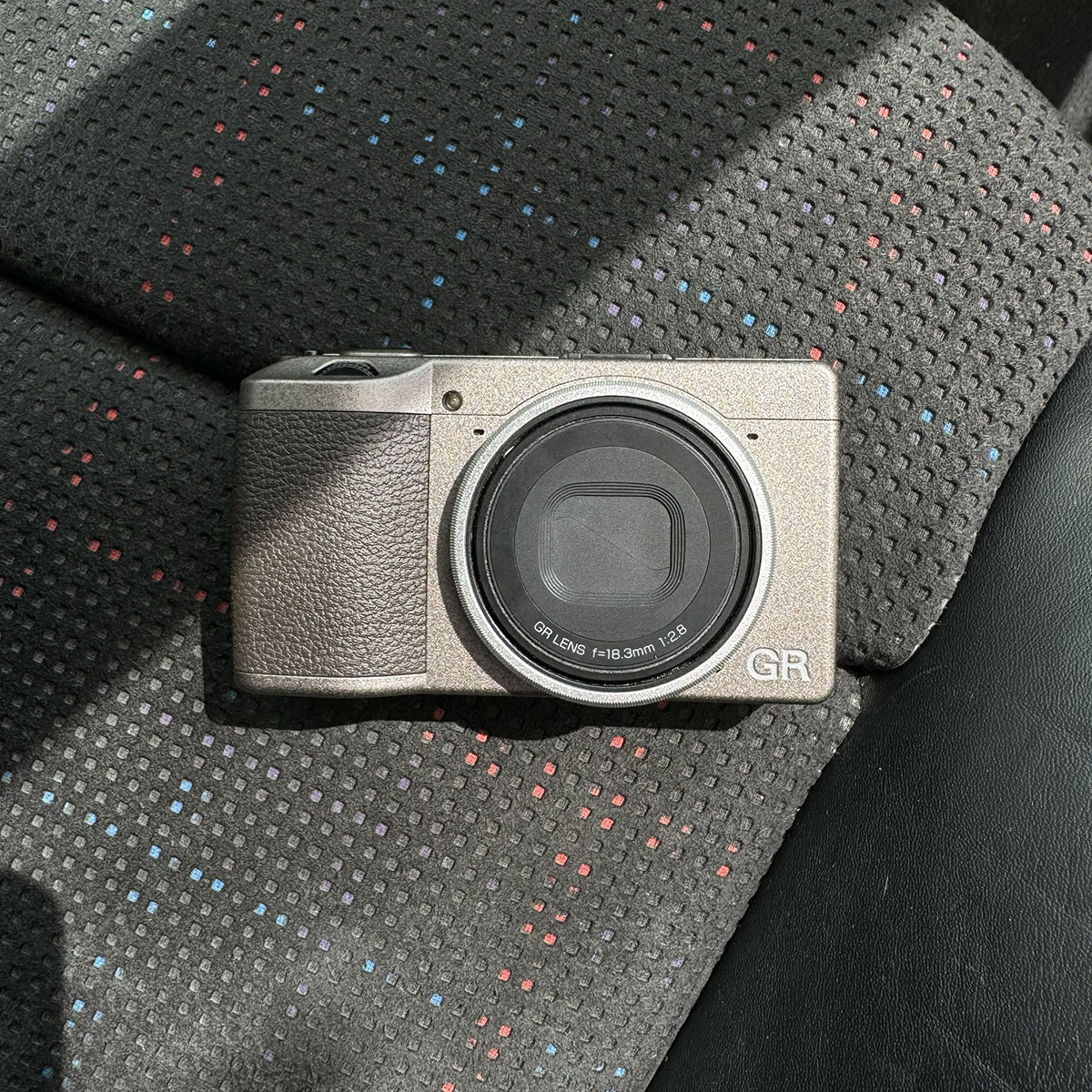
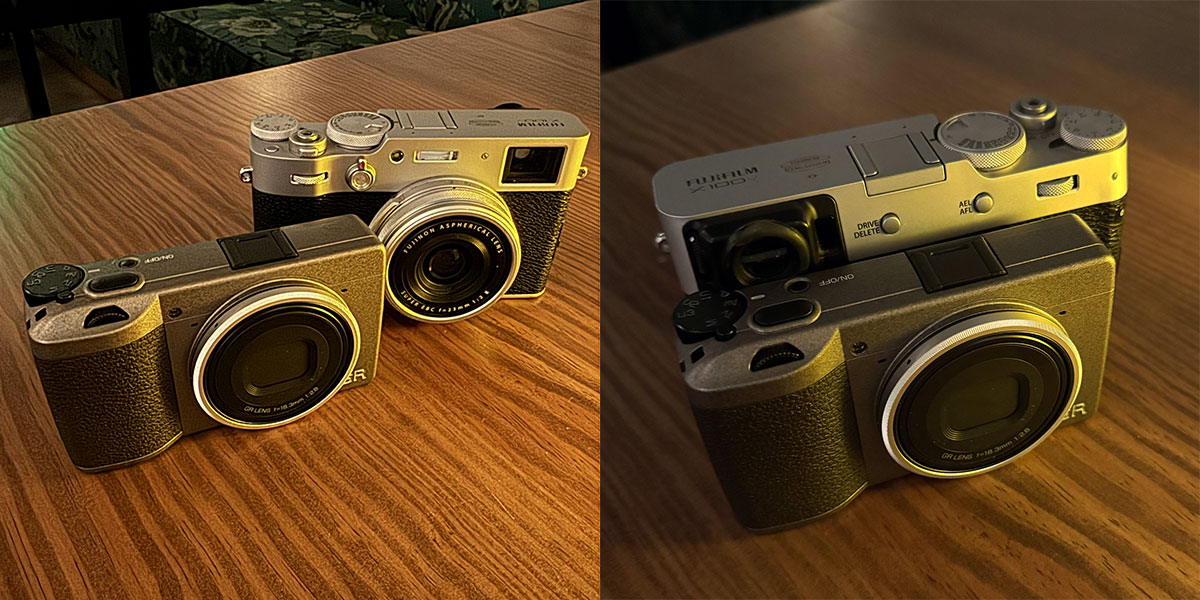
I’ve been using my Fuji X100V camera since 2021. It’s been a great camera and one I’ve previously posted about being the best travel camera. But, I recently purchased the Ricoh GR III and I think I might have to take that comment back.
The Fuji was a pretty nice travel camera upgrade compared to the camera I was using before that, a Sony A7 III with a prime lens, and the Sony RX1 full sensor point & shoot I had before that. But, over the past couple of years I’ve been finding it more of a hassle to carry the Fuji around when traveling, especially because phone cameras have gotten so much better. Also, because of how popular the Fuji camera has become (thank you TikTok) and the prices gone up due to scarcity, I stopped slinging it across my shoulder out in the open like I used to before. That means I need to carry it in my shoulder bag making it a hassle and a slow process to use.
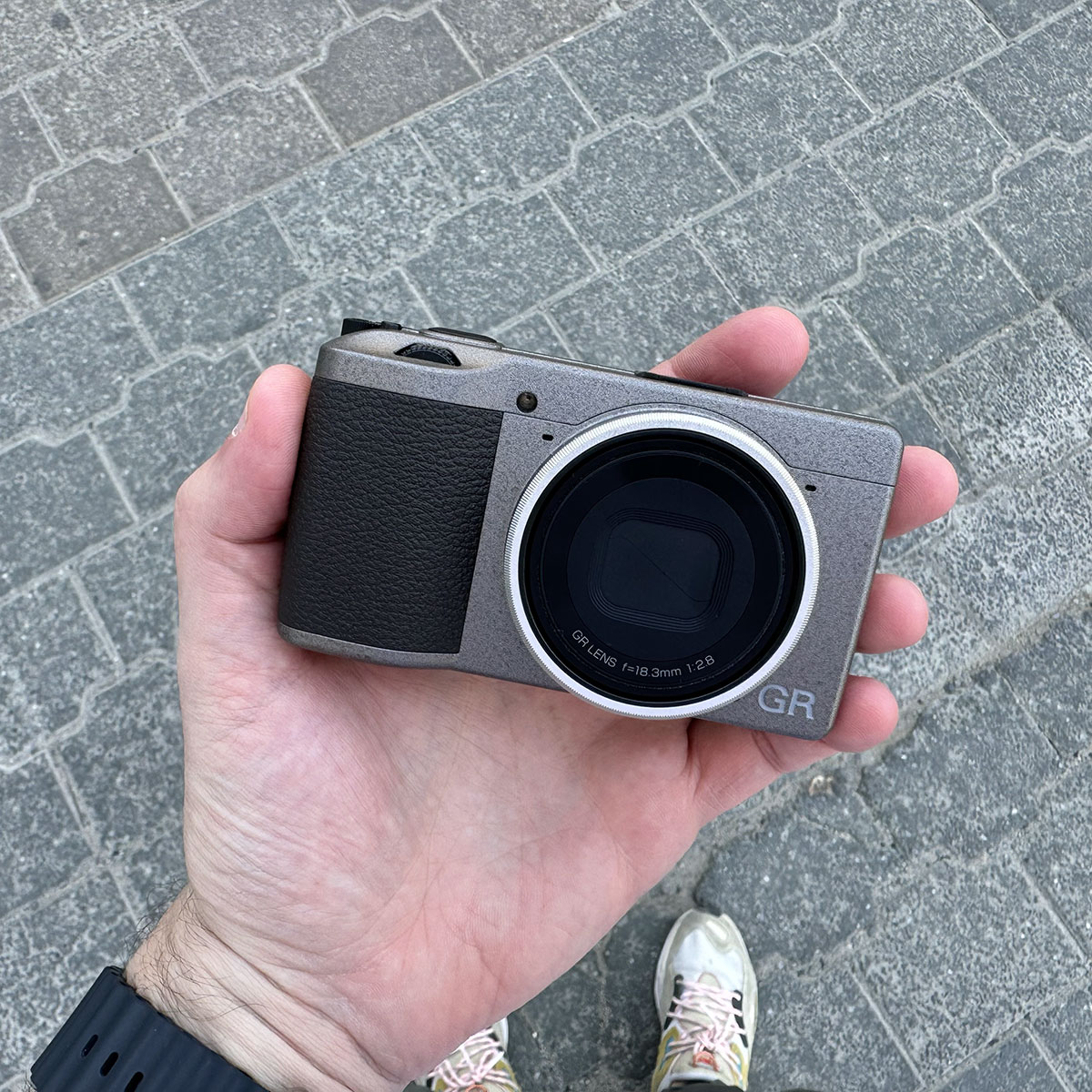
So I started looking at alternatives and decided on the Ricoh GR III. It was the camera I was initially deciding on when I got my Fuji. It’s got a similar sized APS-C sensor but in a body that is a lot more compact. I also went with the 28mm version (they also come in 40mm) so that it’s a wider field of view than my Fuji’s 35mm which should be better for travel photography.
Similar to the Fuji, the Ricoh has a cult following and so the cameras are also out of stock all the time. But, I got lucky and found the Diary Edition on BHPhoto. It was backordered like all the Ricohs, but the Diary Edition with my luck had an estimated in-stock date of around 2 weeks. I guess someone must have canceled and I was checking the website at the perfect time. I placed the order and once it was in stock they shipped it straight to Kuwait.
First impressions, I love it. I got the Diary Edition because it was the one that was available but the only difference over the regular version is the color. The normal GR III is black, Diary Edition is a warm grey, I have zero preference, both are nice in their own way and I wouldn’t care less which one I had.
The camera is tiny, it’ small enough to fit into my tight jeans pocket which means it can easily fit into all my other pockets as well. In winter it definitely won’t be an issue stuffing the camera in one of the may jacket pockets so it already has a big advantage over the Fuji. The other thing I really like about it is the fact I’m shooting more with the camera. This is going to sound weird but the best thing the Fuji has the Ricoh doesn’t have is the electronic view finder. It makes shooting a lot more enjoyable. But, because the Ricoh doesn’t have a viewfinder, it’s making me shoot more. Mainly because it’s quicker since I don’t need to raise the camera up to my eye. And also by not raising the camera up to my face, it makes me less noticeable that I am taking pictures, so I take more. I know I could shoot with the rear screen of the Fuji which also has the advantage of tilting, but because I like using the EVF, I’ve just gotten used to using the Fuji that way and I’ll always prefer the EVF over the rear screen.
I have a trip coming up in two weeks time and will be taking my GR III with me. Once I’m back I’ll post about the experience. For now, if you have any questions let me know.
Yesterday KDD launched a new line of ice cream they’re calling “Good for Me”. It’s ice cream that has zero percent added sugar making them healthier than their regular ice cream. Here is everything you need to know:
They will be available in three flavors, vanilla, strawberry and chocolate
It still tastes sweet because they use a combination of plant-based sweeteners, stevia and erythritol
The chocolate cup has 130 calories while both the strawberry and vanilla have 140 calories (170ml)
The total sugar in this ice cream is 6 grams (this is from the natural lactose in milk), which is 65% less than regular ice cream
The ice cream does not contain artificial colors or flavors
The price is 400 fils per cup (their regular old ice creams are 100 fils per cup)
KDD will be launching more GOOD FOR ME products in the future (I hope they launch sugar free Silver 🙇🏼♂️)
Good For Me was co-funded by The Kuwait Foundation for the Advancement of Sciences and Clinically tested by Dasman Diabetes Institute
Correction: I previously stated the number of calories were per 150g, it’s actually per 170ml and so I’ve corrected that.
Fable is a chocolate story that’s been in the making for over three years and they’re finally launching today. It’s a locally created chocolate bar concept launching with 7 Fable flavors including Qurs Egaily, Strawberry Cheesecake, Caramel Popcorn, Coffee Crunch (Protein), Peanut Butter (Vegan), Birthday Cake, and Hazelnut.
The first thing that caught my attention were the colorful illustrations and branding on all the chocolate bars. The owner loves telling stories and so he wanted all his chocolate bars to tell their own individual stories as well. That’s why the flavors aren’t listed on the front of the packaging. Instead, illustrations are used, so customers have to interpret them to identify the flavors.
Fable will constantly be rotating flavors and have 67 different ones in the pipeline right now. They’ll also be releasing a different influencer flavor every month that will be done in collaboration with various local influencers and feature them illustrated on the chocolate bars.
If you’re interested in trying their chocolate bars, you can get them from their website fablechocolates.com or head over to their instagram account for the link or more details. @fablechocolates
The Red Fort (also called the Red Palace) is one of my favorite historical sites in Kuwait. The fort was built in 1897 with the primary purpose to defend the agriculture farms in Jahra. In 1920 it was also the location of the famous Battle of Jahra.
Not a lot of people know about the fort, and most people who do haven’t been there. I’ve always found the fort to be very photogenic and visually interesting since we don’t have anywhere else in Kuwait that looks like it. I’ve also always loved how the fort was open to explore, you could enter any room you wanted, walk up any steps and just wander around the place enjoying the outdoors.
However, the fort needed some TLC. Last year, a team of local experts were assigned to revive and restore it, and they’ve been hard at work ever since.
The project has multiple stages, with the final stage being the complete restoration of the fort to its original state. However, the road to this goal is long, so the team began by enhancing the current visitor experience. For example, they added aesthetically pleasing lighting throughout the fort, making it more nighttime-friendly, which is important since the fort is open until 8PM. They also constructed new raised pathways to allow visitors to explore the main courtyard without having to walk in the dirt. But the most significant addition to the Red Fort is the brand-new ‘Arms & Armory Museum’.
The team took over an existing building right outside the walls of the fort and repurposed it into a new museum that will house more than two centuries of artifacts. The new Arms & Armory Museum will reflect the Kuwaiti society’s complex relationship with arms, serving as tools for self-defense, aiding in hunting, symbols of status and wealth, and ornate works of art to be admired.
I was given an early sneak peek of the museum and was pleasantly surprised by how beautifully it was coming together. The team managed to procure artifacts from the National Museum and private collectors but, since the display cases were only recently installed, the exhibit is still a work in progress. The aim is to have it ready to open by the end of summer, around the time schools start again so that students will be able to explore the museum when they visit.
The Red Fort is currently closed to the public while it’s being worked on. Once the museum is ready and the fort reopens, I’ll let you know or follow @kw_nccal for updates.
This morning I noticed a new “Made with Ai” label under my instagram post on @248am and I thought that was really interesting and worth talking about. The image was labeled “Made with Ai” because it was in fact made using the help of Ai. Although a bit too dramatic a label for this specific case, I do think this is a really helpful feature since so much digitally generated content looks real nowadays.
Throughout the years I’ve enhanced photos published on the blog, sometimes it’s minor stuff like increasing saturation, playing with contrast, or removing blemishes. Other times it’s more drastic like removing garbage from photos, or recently with instagram, adding more image to an existing image.
Before Ai, removing things such as garbage required the use of a Photoshop tool called the clone brush. It wasn’t too difficult to do, but depending on the scene, it sometimes required some skill to make it look natural.
But, over a year ago, Adobe introduced a new feature into Photoshop called generative Ai. This changed everything. I could now select all the garbage in a scene for example, and with a click of a button, Photoshop will remove it all. The Ai is so good you wouldn’t even be able to tell the image was manipulated.
With Instagram, I use Ai in a slightly different manner. Most images are shot in landscape, but all my posts are square. So, to get wide images to fit into my square without having to crop into the image, I sometimes add more image. For example, my lions post from today. I was limited with the number of photos available of the lions, so I had to use a screen grab from a video. The video was wide and so I could either crop into the image and lose some of the background, or keep the full image and just add more sky and more grass below. I chose the later. Because the video was only 1080p, cropping into it would reduce the resolution, but even if resolution wasn’t an issue, cropping into the photo would make the final image feel claustrophobic after adding my headline.
So let me take you through the different stages to better illustrate this. First one above is the actual screen grab from the video.
The photo above is after converting it to a square. Can you spot the difference? First thing you’ll notice is the extra sky and grass below the image. Then if you look carefully you’ll also notice a slightly increase in saturation and a visually more interesting sky with a cloud formation.
Finally, here is a side by side image of how my post have looked like without Ai on the left, and the final result with Ai on the right.
Not sure I like this specific photo being labeled as “Made with Ai”, since that’s not true, it wasn’t made with Ai. The main subject matter wasn’t changed, I didn’t for example generate fake lions or manipulate the story the image is telling, so I don’t feel it deserves that label. Maybe an “Enhanced with Ai” label would have been more appropriate here.
I think the “Made with Ai” label is meant to prevent the negative use of Ai, like in fake news, but in this case, Instagram is making it look like my image is fake news and not real when it is. But since Instagram is labeling all images that used some sort of Ai as “Made with Ai”, this label is going to be the new norm I guess.
We have the habit of demolishing old structures instead of restoring them in Kuwait, so when I found out the old Al-Othman Mosque in Hawalli was being restored, I reached out to the team working on it asking if I could write about it.
The mosque restoration is being spearheaded by Eng. Adnan Al-Othman and sponsored by the Abdullah Abdulatif Al-Othman Charitable Trust. Adnan’s father is the one who built the mosque so he’s very familiar with it.
Al-Othman Mosque was established in 1958 and later opened for public use in 1961. It was one of the first grand mosques to be built in Kuwait, and also the first to have a dome, making it an important landmark.
Since its opening over 60 years ago, many changes were made to the mosque, some permanent, but most were thankfully superficial. The mosque originally had a colorful design that was unique for the time, but over the years it got repainted a monotone beige and white blending it into it’s Hawally surroundings. The interior which was covered with intricate decorations and script were also all covered with white paint erasing a lot of what made the mosque so unique and special.
The restoration team dug up as many photos and videos of the original mosque as they could find, so that they could better understand all the changes that were made over time. They also started the process of removing structures that weren’t there originally, like metal shading over the courtyard and an extension to the mezzanine floor. Additionally, they began stripping the paint from both the interior and exterior of the building, revealing some of the old decorative art and colors (samples above).
The restoration team’s plan is to restore the mosque as close as possible to its original state. They’re deep into the restoration process now, but they don’t have a clear timeline for completion since the work must be slow and careful. Once this project is finished, I hope more people will realize and appreciate the importance of preserving old Kuwait.
Last week a video popped up on my feed that I thought was fascinating. A guy called Hamad AlMuzaini (@hamad.muzaini) had spotted a little piece of architecture history at a scrap yard in Amghara, the Maison Bulle (Bubble House) by French modernist architect, Jean-Benjamin Maneval.
The Bubble House which was conceived in 1963 is considered to be one of the most successful designs for “futuristic plastic houses“. Only 300 of these prefab homes were ever built and so it’s pretty incredible that not only did one end up in Kuwait, but the fact that it survived and is in fairly decent condition is a miracle.
Hamad is an architect and designer who lived and worked in the US for roughly 13 years. Most of his work experience revolved around modular and prefabricated construction, which is why when he spotted the Bubble House roughly two years ago, he immediately recognized that it was a novel system and had immense value. But, Hamad only realized recently what he had spotted when an account he follows posted a similar Bubble House. So Hamad went back to Amghara and called the number of the scrapyard asking if it was for sale. From there he purchased the house and started planning its relocation.
Most of the images online consistently depicted the Bubble House set against nature, making a really beautiful composition of something quite futuristic. So he decided to move the Bubble House out of the scrap yard and onto his family’s farm.
Currently Hamad is focusing his efforts on restoring the structure without permanent and damaging procedures. He wants to restore it as close to the original as possible but without an interior layout, leaving it as an open floor plan. He hopes to one day host events with some community engagement surrounding the Maison Bulle, but for now his focus is to restore it.
How the Bubble House ended up in Kuwait in the first place is still a mystery, but at least it’s in good hands right now.
I’ve only been drinking coffee since 2016, and since then I’ve been mostly been making my coffee at home. I started off with a De’Longhi bean to cup coffee machine, and then later upgraded to the Breville Oracle, followed by the Rocket Appartamento and then finally to a La Marzocco Linea Mini a couple of years ago. Along the way I upgraded my grinders as well, the first two machines had grinders built in, but with the Appartamento I got a Rocket Faustino Grinder for it, and with the Linea Mini I got the Mahlkönig X54 grinder.
I didn’t end up liking the X54 at all even though I love the Mahlkönig brand (they make some of the best commercial grinders). The X54 wasn’t very consistent, it was slow, and the grind adjustment knob felt horrible, the whole tactile experience actually was poor. Compared to the experience of using the commercial quality Linea Mini machine, the X54 felt very plasticky. So I decided I’d upgrade my grinder to one that would match the quality of my coffee machine. I did a lot of research and had eventually settled on the Ceado E37s.
I found a website online that would ship it to Kuwait and after their Black Friday discount and removing VAT, the price shipped to Kuwait was 525KD. Not cheap, but it was commercial quality, had large 83mm burrs and highly recommended by reviewers online. Just as I was about to make the plunge, I found out about the Mahlkönig E65S GbW. GbW stood for grind by weight, it was a new grinder by Mahlkönig where you could set the weight of coffee you wanted grinded, and then just place the portafilter into the machine and it would grind enough beans till it hit your weight. It was also fast, commercial grade, had a large adjustment ring as well as a large digital screen. It wasn’t cheap, online I found it for around 690KD after discount shipped to Kuwait, but since I knew the local dealer, I figured I could try and get a better deal locally.
The local dealer referred me to Coffee Tools who were selling the machine for a whopping 836KD (they since dropped it down to a more reasonable 731KD). I tried to work out a barter deal but that didn’t pan out but they did offer me a 25% discount which brought the price down from 836KD to 627KD. It was around 70KD cheaper than the price I found online so I decided to pull the trigger and get it (along with a much shorter 250g hopper). It was the best decision I made.
The E65S is such an incredible grinder. Firstly performance wise, it’s fast grinding out 18g of coffee in under 6 seconds (compared to 18-20 seconds of the X54). It’s also been really consistent and I’ve been using it daily since January. I don’t adjust the grind settings as much as I used to, and if I do it’s generally minor adjustments. It’s also really easy to adjust the grind size since the adjustment ring is large and the screen displays a digital read out of the distance between the two burrs. So I have my baseline set at 0.094mm and I generally adjust anywhere between 0.088 and 0.0096mm. It’s minor adjustments which I can do accurately because of the digital read out. But, the best feature is grind by weight. I use 18g of beans for my coffee, with regular grinders you use a timer to measure that out. So for example with my previous grinder, 18 seconds would grind around 18g of coffee, sometimes it would grind 16g in that time, sometimes 19g. It wasn’t a very efficient workflow either. You’d first put the portafilter on the scale and reset it to 0g, you’d then place portafilter in the grinder and have it grind for 18 seconds, you then put the portafilter on the scale again and see how much coffee it grinder, if its under 18g you have to put it back in grinder and manually grind a bit more coffee, if it’s more than 18g then you have to remove some coffee. It was a slow process and messy. The new workflow is so much better because of the grind by weight feature. All I have to do is place the portafilter into the grinder, and the grinder takes over and does all the calculations for me. As soon as I place the portafilter into the machine it starts grinding the coffee while measuring the weight. I think I read somewhere it does 6,000 calculations a second. Once the machine grinds 18g of coffee out, it stops and flashes green to let me know it hit the weight.
My coffee making process in the morning is a much more pleasant experience. I know a lot of people won’t understand or care about any of this, but as I’ve gotten older and I can afford nicer things, I’ve started caring about my experiences with objects a lot more. It could be a fork, it could be a car, I just like the experience of using nice things. My grinder and coffee machine are the first things I interact with in the morning. Then it’s my computer and then it’s my car. So having a good coffee making experience, then sitting in front of a fast computer with fast internet followed by driving to work in a 1970 Alfa Romeo, it’s really a great way to start the day. So would I recommend this grinder, yes. Do I recommend investing in expensive coffee equipment, for most people no. But if you enjoy using nice equipment and like the process of making coffee then yes. It’s actually cheaper to spend 3,000KD on coffee equipment than to have two coffees a day at a coffee shop. If you have 2 coffees a day, thats around KD1,460 you’re spending a year. So you’ll make your money back pretty quickly making coffee at home. If you’re married and your wife also drinks coffee then you’re going to make your money back twice as fast. And a commercial grade coffee machine is going to last a pretty long time at home.
I also highly recommend La Marzocco in Kuwait, their customer service department is one of the best I’ve experienced in Kuwait. Because they’re commercial machines, anytime I have an issue I’m treated like a coffee shop where any downtime is bad for business. I usually get a service person over either the same day if I report a problem in the morning, or the next day if I report a problem in the evening. So 5 stars to them.
If you have children and are looking for activities to stimulate their minds, this post should interest you.
Let’s Explore is a dynamic program dedicated to nurturing creativity and curiosity in children aged between 4 and 12. They pop-up in different places around Kuwait and this month they’re based at the Yarmouk Cultural Centre.
Their classes are designed to inspire and empower young minds through hands-on experiences, and lots of exploration. It’s a great way for kids to discover new interests while also making new friends.
There are two types of classes currently available, Little Explorers and Future Engineers:
Little Explorers:
– 🧪 Chemical Engineering with Sensory Play
– 💡 Electrical Engineering
– 🔬 Science
– 🎨 Arts and Crafts
Ages: 4 to 6
Days: Monday and Wednesday
Time: 4:00 pm – 5:15 pm
Ages: 7 to 12
Days: Monday and Wednesday
Time: 5:30 pm – 6:45 pm
There are limited seats available so if you want to sign up your child, click here.
You should also follow them on Instagram if you want to find out about their upcoming Ramadan location, they just shared it with me and it’s going to be really fun for the kids. Here is their account @letsexplorenonstop